

The 5 Best Flooring Financing Options for Home Renovations in 2026
Last updated: 2026-11-10
Walking into a showroom and seeing the perfect hardwood or luxury vinyl plank can feel like a dream until the estimate arrives. For many homeowners, the sudden realization of the total cost can turn a renovation project into a source of significant stress. Financing bridges that gap between your current floor and your vision. Whether you are dealing with a water-damaged subfloor that requires immediate attention or you are simply upgrading your aesthetics from 1990s beige carpet to modern wide-plank oak, the financial gap is often larger than anticipated when you factor in labor, materials, and unexpected contingencies.
Selecting the right lender requires looking beyond just the monthly payment. You must weigh the interest rates, the length of the terms, and how quickly the funds become available. A lender might offer a low monthly payment that seems manageable, but if that term spans ten years, the total interest paid could eventually exceed the cost of the flooring itself. Conversely, a short-term high-interest loan might seem daunting, but it could be the most cost-effective way to complete a quick repair. This roundup evaluates the top players in the market to help you navigate your renovation journey without breaking the bank.
- FloorDaddy
- Express Flooring
- FastLendGo
- Synchrony
- Splash Financial
How We Evaluated the Top Flooring Lenders
Our evaluation process focused on the specific needs of people undergoing home improvements. We looked at the diversity of credit requirements, ranging from those with pristine credit scores to individuals needing a second chance. Speed of approval is vital when you have contractors waiting to start work on your subfloors. A delay in funding can lead to “change orders” from contractors who charge premium rates for waiting on-site, or worse, you may lose your installation slot entirely, pushing your project back by months.
We also prioritized flexibility in repayment terms and the availability of special interest-free periods. A lender that offers zero percent interest for a set window can save a homeowner thousands of dollars, provided the borrower has the discipline to meet the deadlines. We analyzed the transparency of their terms and the ease of the application process for various borrower profiles, specifically looking for “soft credit pulls” that allow for rate comparison without damaging your credit score.
| Lender Name | Primary Terms/Offers | Max Loan/Limit | Speed/Ease | Best For |
|---|---|---|---|---|
| FloorDaddy | 0% Interest if Paid in Full in 48 Months | see site | Same-day approval | Long-term flexibility |
| Express Flooring | 0% interest for up to 12 months | see site | see site | Low monthly payments |
| FastLendGo | Personal loans from $500 to $5,000+ | see site | Quick access | Bad credit/Emergency |
| Synchrony | Marketplace/Credit Card options | see site | Prequalification available | Brand-specific shopping |
| Splash Financial | Personal Loans & HELOCs | see site | Rates in 3 minutes | Rate comparison |
Top Rated Flooring Financing Providers
1. FloorDaddy
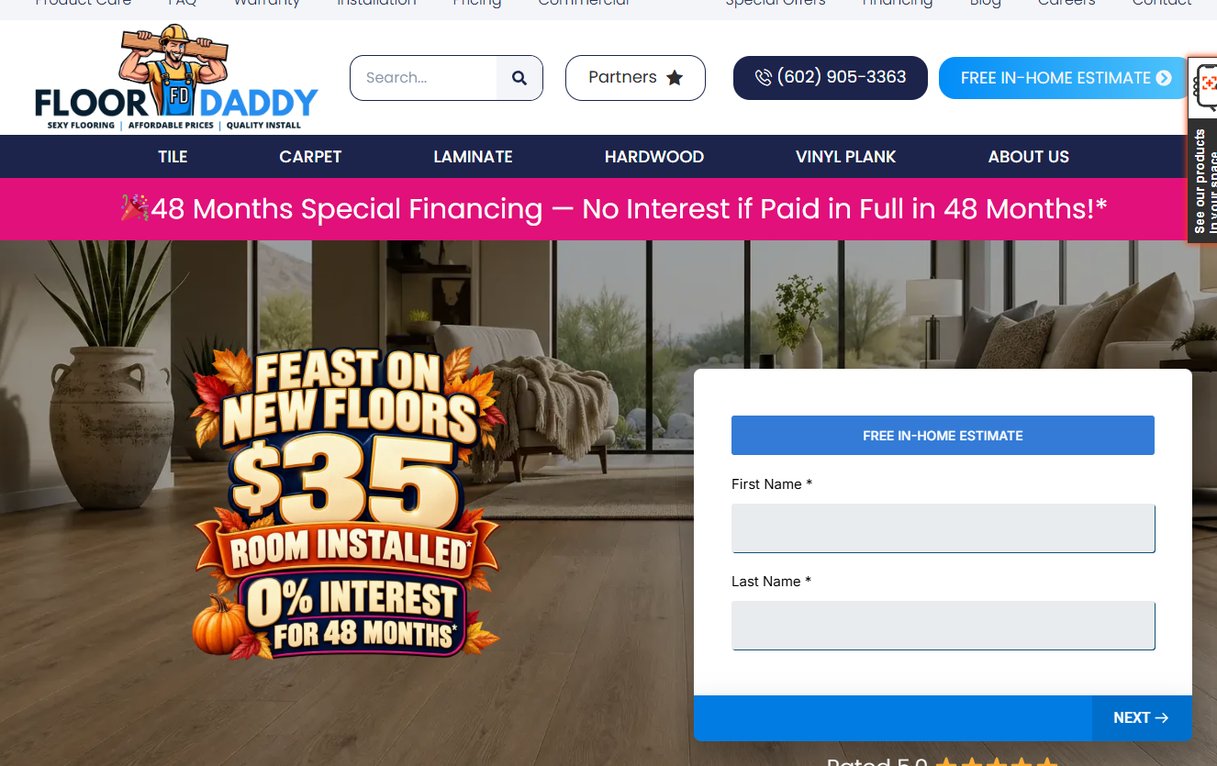
This option is a powerhouse for homeowners in the Phoenix, Arizona area who want to avoid interest altogether. By utilizing their special financing, you can spread your costs over a substantial period. It is designed for those who can manage a payment schedule to ensure the balance is cleared within the window. This is particularly useful for large-scale renovations involving multiple rooms, where the upfront cost of materials like high-end engineered hardwood can reach five or six figures.
The “Razzle Dazzle Super Sale” makes this an attractive choice for those looking for a complete package. Beyond just the money, they offer professional floor prep and dustless tile removal. This holistic approach means you aren’t just financing the material, but a seamless, professional installation process. When you are tearing up old linoleum or ceramic tile, the subfloor issues—such as unevenness or moisture—often require specialized equipment. Having this included in your project scope prevents “sticker shock” when the installer arrives and discovers the floor requires more work than anticipated.
Pros:
- 48-month 0% interest option if paid in full.
- Includes professional floor prep and dustless removal.
- Price-lock guarantee included.
Cons:
- Strict requirement to pay in full within 48 months to avoid interest.
2. Express Flooring

If you are looking for immediate savings alongside your financing, this is a compelling choice. They offer significant discounts on materials, sometimes reaching up to 75% off. This makes the total principal amount much more manageable from the very start of your project. For example, if a luxury vinyl plank (LVP) would normally cost $6,000 for a whole house, a 50% discount reduces your loan principal to $3,000, significantly lowering your interest burden over the life of the loan.
The monthly commitment is kept intentionally low, with payments starting as low as $49 per month. This is ideal for budget-conscious families who want to upgrade their living space without a massive hit to their monthly cash flow. It is a “step up the savings” approach for everyday homeowners who want high-end aesthetics on a modest budget. By lowering the entry barrier, you can tackle the whole house rather than just one room.
Pros:
- Low monthly payments starting at $49.
- Significant material discounts up to 75% off.
- 12-month 0% interest availability.
Cons:
- Offers are time-sensitive and subject to specific seasonal windows.
3. FastLendGo
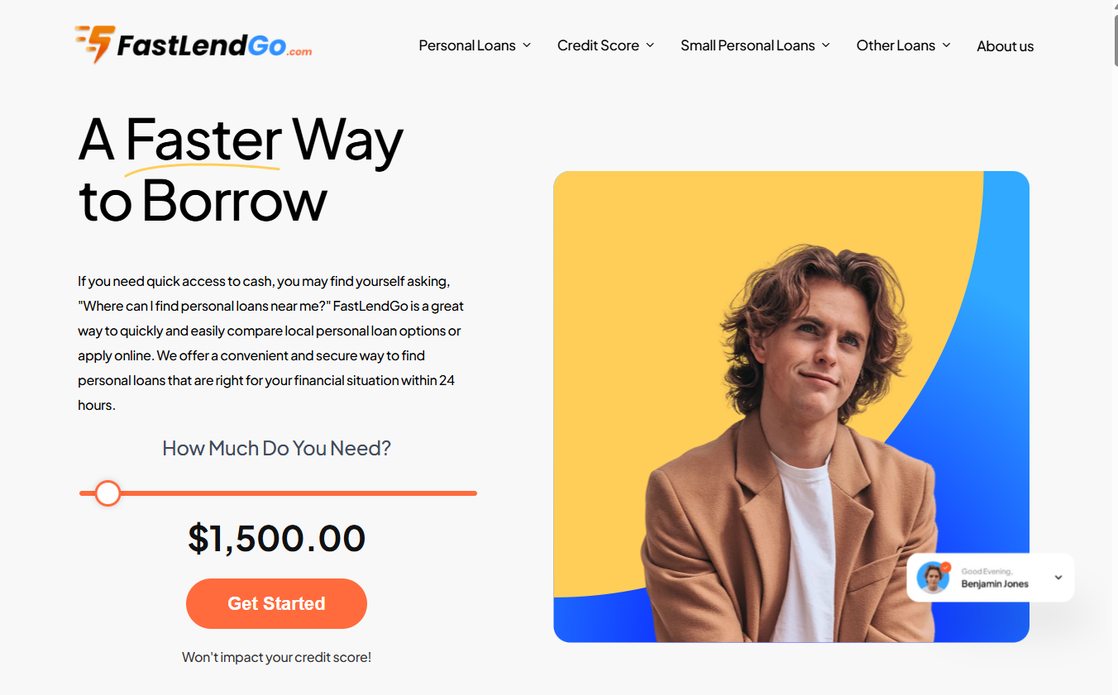
Sometimes, life doesn’t wait for a scheduled renovation. For those facing emergency repairs or needing quick access to cash, FastLendGo acts as a versatile partner. Imagine a pipe bursts under your kitchen floor, or a heavy object cracks a large section of your stone tile; you cannot wait weeks for a traditional bank loan to process. They cater to a wide range of credit tiers, including those with bad credit who might struggle elsewhere.
Their product suite is incredibly broad, covering everything from small $500 loans to larger amounts for significant repairs. Whether it is a motorcycle, a roof, or a floor, they provide a way to compare local options quickly. It is a pragmatic solution for those who need agility over complex terms. The ability to access funds quickly can prevent secondary damage, such as mold growth caused by moisture trapped under damaged flooring.
Pros:
- Options for various credit scores, including bad credit.
- Fast comparison of local personal loan options.
- Wide variety of loan purposes.
Cons:
- High-speed, small-dollar loans may carry higher interest rates.
4. Synchrony
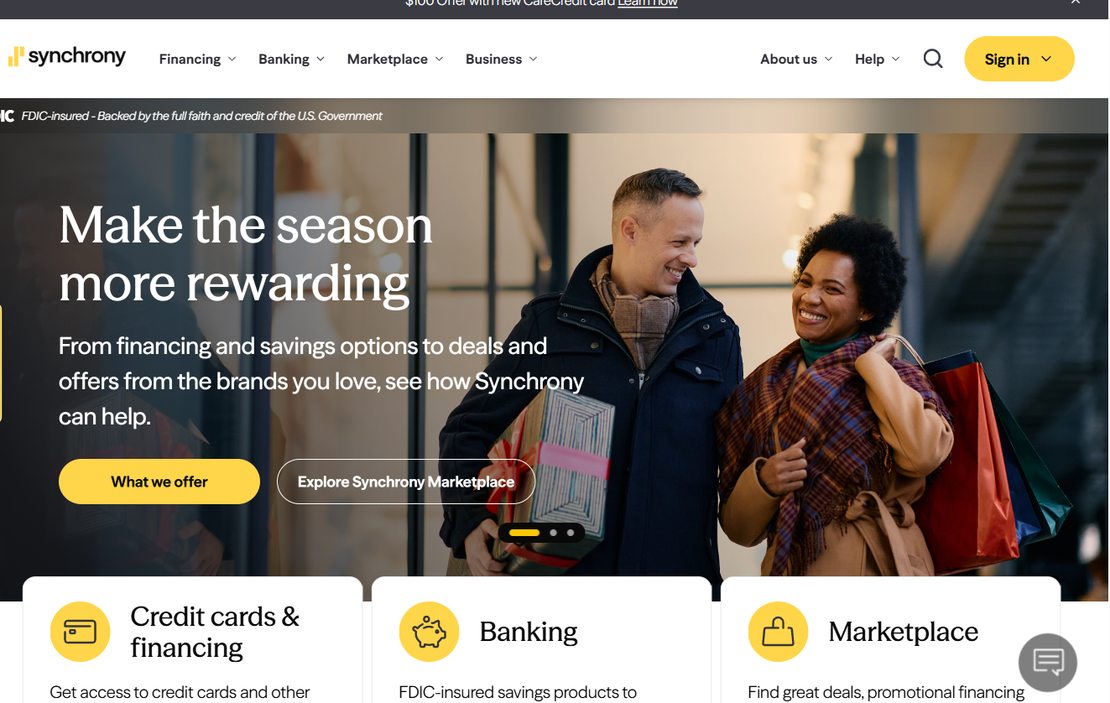
Synchrony operates differently by acting as a massive marketplace of financing through various brands. Instead of a single loan, you are often accessing credit through a specific retailer’s card. This makes it incredibly convenient if you have already picked out your flooring at a major home goods store. When you walk into a specialty flooring showroom, they likely offer a Synchrony-backed credit line, allowing for instant application at the point of sale.
They offer a “Home Team Advantage” and various marketplace options that can integrate with your lifestyle. It is a great way to shop for furniture or flooring under one umbrella. For those who want to build a relationship with a major financial institution, Synchrony is a heavy hitter. This model is particularly effective if you are doing a complete home overhaul, as the credit line can often be used for multiple purchases across different home improvement retailers.
Pros:
- Extensive marketplace of different brands and retailers.
- Easy prequalification processes.
- Integrated banking and credit card benefits.
Cons:
- Financing is often tied to specific retailers rather than a general-purpose loan.
5. Splash Financial
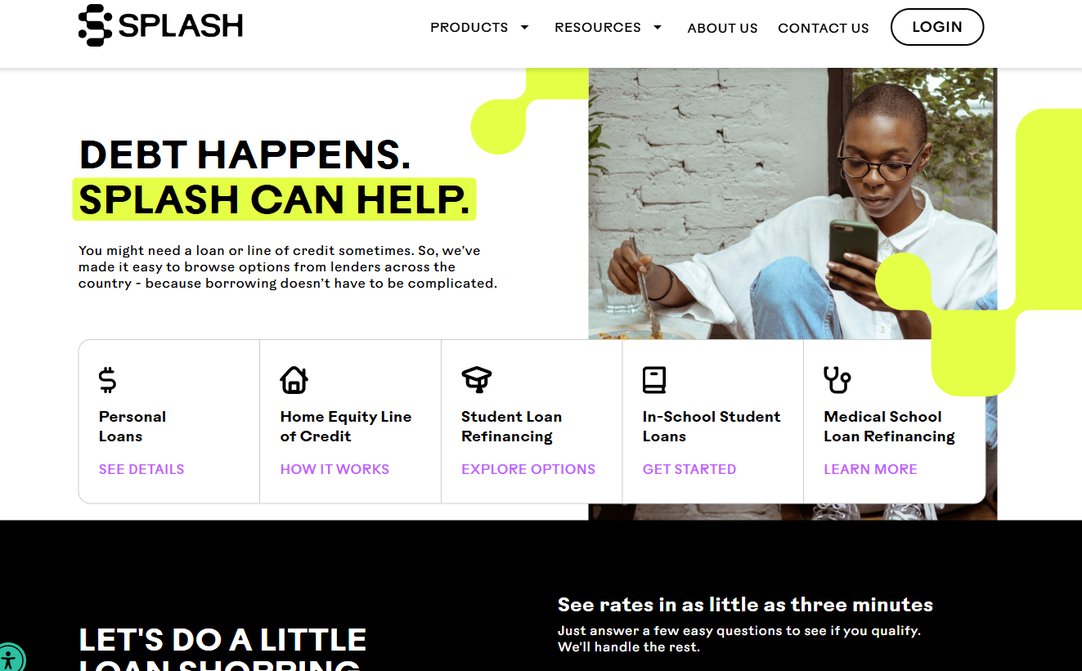
For the modern borrower who values data privacy and speed, Splash Financial provides a streamlined digital experience. They function as a bridge, allowing you to browse offers from various lenders across the country. It removes the headache of visiting multiple banks individually. Instead of driving from bank to bank to compare APRs, you can sit on your sofa and see what the market is offering in real-time.
The platform is designed to be non-intrusive, allowing you to check your rates in as little as three minutes without affecting your credit score. This is perfect for the “just browsing” phase of a renovation. They offer diverse products like HELOCs (Home Equity Lines of Credit) and personal loans to suit different financial structures. A HELOC might be better for a massive, multi-room renovation that will increase your home’s value, whereas a personal loan is better for a quick, single-room upgrade.
Pros:
- Check rates quickly without affecting credit scores.
- Wide range of lenders in one marketplace.
- High emphasis on data privacy and security.
Cons:
- The final interest rate depends heavily on external lender decisions.
Understanding the Hidden Costs of Flooring Projects
When calculating how much you need to borrow, many homeowners make the mistake of only looking at the “price per square foot” of the material. This is a dangerous error that can lead to budget overruns. To truly understand your financing needs, you must account for these four often-overlooked categories:
- Subfloor Preparation: If you are laying luxury vinyl plank over an old, uneven concrete slab, you may need a self-leveling underlayment. This can add hundreds of dollars to the labor cost.
- Transition Strips and Molding: These are the small pieces of wood or metal that bridge the gap between different types of flooring (e.g., from hardwood to carpet). They are often priced per linear foot and can add up quickly in larger homes.
- Waste Factor: You should always order 10-15% more flooring than your actual square footage to account for cuts, mistakes, and odd angles in your room layout.
- Disposal Fees: Many contractors charge an additional fee to haul away your old carpet, padding, or tile. Ensure this is included in your written estimate.
How to Select Your Best Option
Before signing any paperwork, you must determine exactly how much you need to borrow. It is easy to get caught up in the excitement of a new look and overextend your budget. Always get a firm, written estimate that includes installation, tax, and delivery fees before applying for a loan. A “low bid” from a contractor might not include the necessary materials for a professional finish, leaving you to pay for the difference out of pocket later.
Watch out for the trap of the “teaser” rate. Many lenders offer 0% interest for a period, but if you miss a single payment or fail to pay the full amount by the deadline, the interest can be backdated or significantly higher. For instance, some “no interest if paid in full” plans will charge you all the accumulated interest from day one if you are even one day late on your final payment. Read the fine print as if you were reading a legal contract, because in many ways, you are. Check if the interest is “deferred” or “waived”; deferred interest is much more dangerous for the borrower.
Finally, consider the impact on your long-term debt. A low monthly payment feels great today, but it could mean you are paying for those floors for years to come. If you are financing a $10,000 flooring project at 12% interest over five years, you could end up paying nearly $3,300 in interest alone. Balance your immediate comfort with your long-term financial health to ensure your new floors don’t become a burden. Ideally, aim for a term that allows you to pay off the debt within 24 to 36 months to minimize interest exposure.
