

Top 5 Lenders for First Time Personal Loans No Credit History in 2026
Last updated: 2026-11-10
Walking into a bank without a credit history often feels like trying to navigate a thick fog without a compass. Many people assume a blank slate in the credit reporting bureaus is a dead end for anyone seeking capital. That isn’t the case. A lack of a FICO score just means you need to provide different kinds of evidence to prove you are reliable.
Finding the right lender means looking past that single three-digit number. Success usually comes down to finding institutions that prioritize your current income and banking stability over your historical data. It is about showing a lender your “character” through steady bank statements rather than just your “capacity” through a score. This guide looks at the most viable paths for your first foray into personal lending, helping you move from uncertainty toward financial agency.
- FastLendGo
- First Tech Federal Credit Union
- Net Pay Advance
- PaydayPeek
- Key Bank
The Evaluation Framework for Emerging Borrowers
Picking a lender involves more than just glancing at an advertised interest rate. By 2026, the industry has moved toward using alternative data points. Lenders often scrutinize your cash flow, how stable your employment is, and even if you pay your utility bills on time. This shift toward “open banking” allows them to see real-time data. They can see exactly how much money enters your account each month versus what goes toward rent or groceries.
This method provides a much more accurate picture than a static credit report. Our comparison focuses on accessibility for people with thin files or no established credit. We looked at how quickly funds actually arrive in a bank account and the minimum requirements for approval. Every option below was measured by its ability to help users just starting their financial journey, specifically weighing the speed of access against the long-term cost of the loan.
| Lender Name | Loan Amounts | Credit Requirements | Funding Speed | Terms/Notes |
|---|---|---|---|---|
| FastLendGo | $500 – $5,000+ | Bad, Fair, Good, Great | Quick access | Multiple states |
| First Tech Federal Credit Union | See site | Member-focused | See site | Requires membership |
| Net Pay Advance | See site | No hard credit check | As soon as today | Instant decisions |
| PaydayPeek | $100 – $5,000+ | Bad credit friendly | Fast | Installment/Title options |
| Key Bank | See site | Standard requirements | See site | FDIC-Insured |
The Top Lenders for First-Time Borrowers
1. FastLendGo
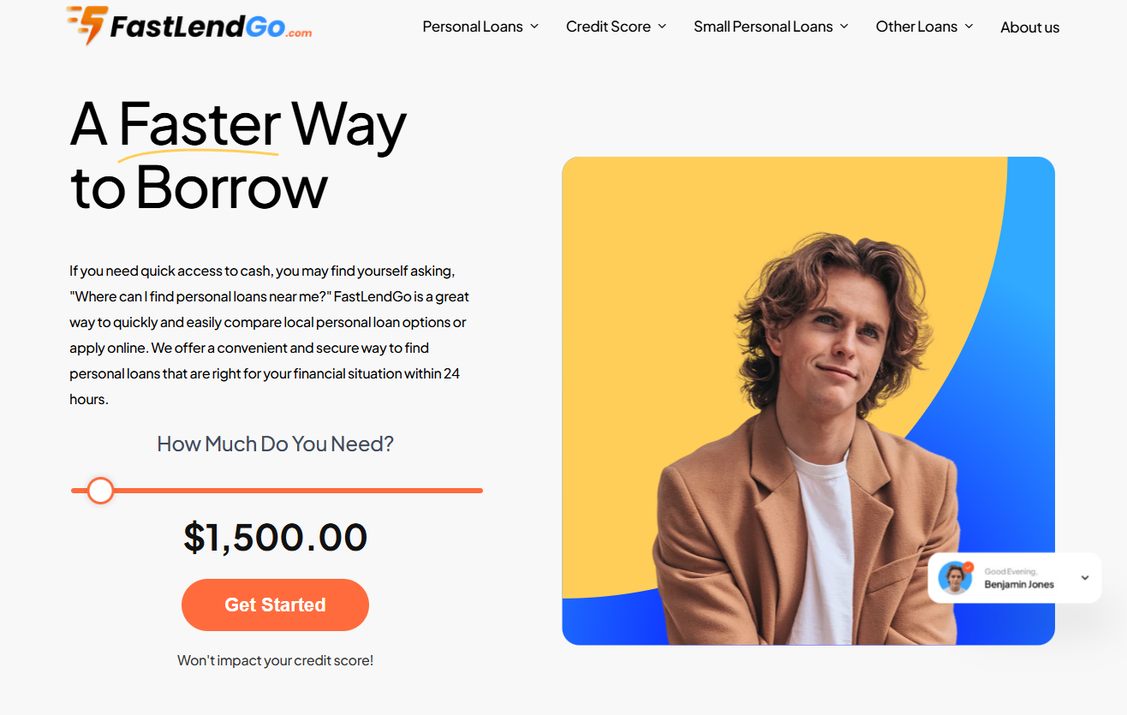
FastLendGo works well for people who need to navigate various credit situations. Whether you are dealing with a bruised score or you simply haven’t built a history yet, this platform offers several options. It is built for speed, which is helpful during stressful moments when waiting for traditional banking approvals isn’t an option.
This lender is useful for specific emergencies like dental work, auto repairs, or even roofing. Because it caters to different credit tiers, it reaches people who might be rejected by big-box banks due to a lack of credit depth. If you need a $1,200 car repair to get to work, FastLendGo provides a way to get that liquidity without the month-long wait typical of standard loans.
Pros:
- Covers a wide range of credit levels from bad to great.
- Specialized financing for specific emergencies like dental or auto.
- Available in numerous states across the country.
Cons:
- Requires navigating a wide variety of loan types to find the best fit.
2. First Tech Federal Credit Union
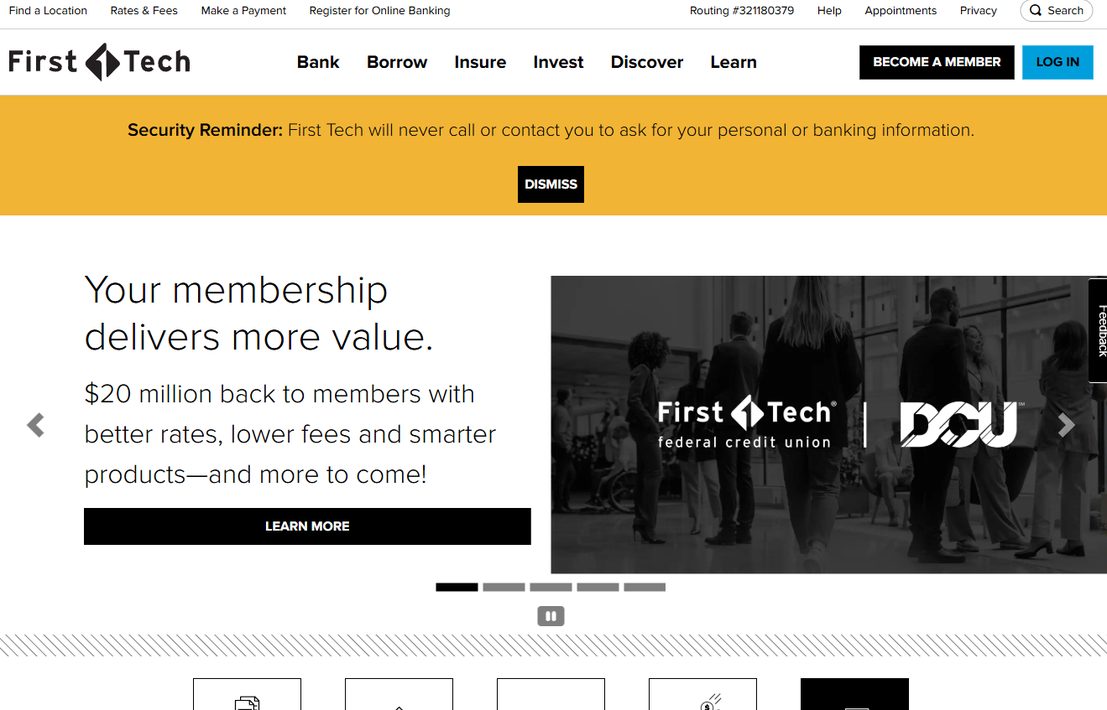
First Tech Federal Credit Union operates differently than the predatory lenders often found online. As a credit union, they focus on delivering value back to their members. This often means more competitive rates and a more personalized experience because the institution’s goal is service rather than maximizing shareholder dividends.
Joining a credit union can be a smart long-term move for a first-time borrower. It lets you build a relationship with an institution that is actually invested in your financial health. While a large national bank might use an automated algorithm to reject a “thin file” applicant, credit unions often have more human-centric review processes. This partnership can lead to better terms for future mortgages or auto loans as you grow.
Pros:
- Member-owned structure often leads to better rates.
- Offers a full suite of financial products from mortgages to insurance.
- Focuses on long-term financial well-being.
Cons:
- Requires membership to access specific benefits.
3. Net Pay Advance
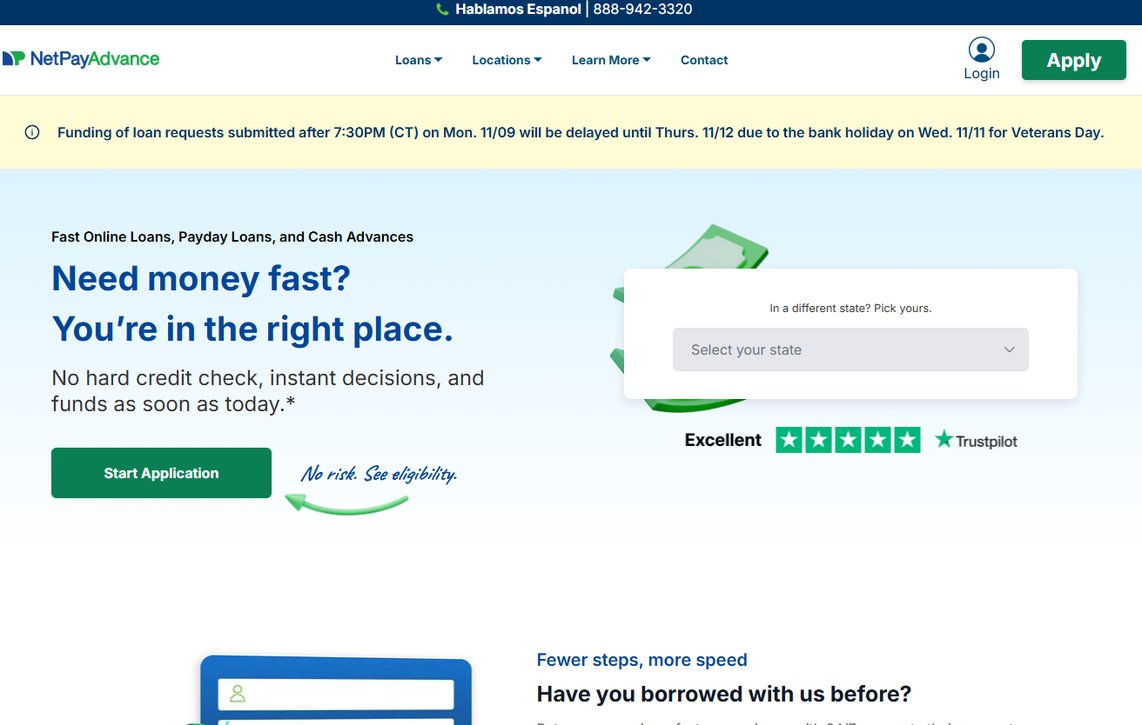
When the clock is ticking and a bill is due tomorrow, Net Pay Advance fills the gap. They specialize in fast online loans and cash advances for people who cannot afford to wait for a traditional bank. It is a high-speed option for urgent needs, like a sudden spike in a utility bill or an unexpected medical co-pay.
One of their best features is the lack of a hard credit check. This is a lifesaver for those without an established score. A “hard” check can temporarily lower your score by a few points, so avoiding it protects your ability to apply for bigger loans later. They aim for instant decisions, often providing funds within the same business day.
Pros:
- No hard credit checks during the application process.
- Extremely fast decision-making and funding.
- High accessibility for various states.
Cons:
- Funding may be delayed during bank holidays or weekends.
4. PaydayPeek
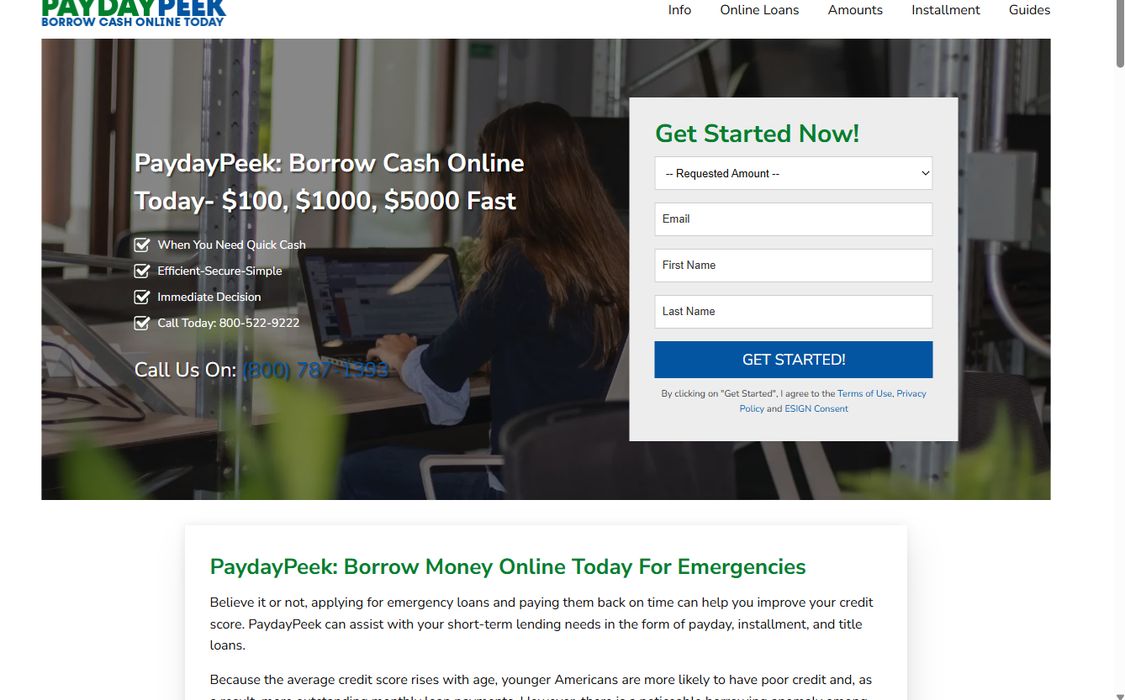
PaydayPeek is for those “in-between” moments when a paycheck is still a week away. They offer various short-term solutions, from simple payday loans to larger installment loans. This is a flexible tool for managing cash flow emergencies, like when a gas bill is due but your direct deposit is delayed by a weekend.
They even suggest that using their services to pay back loans on time can help build a credit score. This makes them a potential training ground for younger Americans starting their financial journey. By treating a small loan as a discipline exercise—paying it back in full and on time—you are practicing the exact behavior that builds high FICO scores over time.
Pros:
- Provides a pathway to potentially improve credit scores.
- Offers multiple loan types including installment and title loans.
- Quick decision process for emergency needs.
Cons:
- Short-term nature of loans can lead to high frequency of borrowing if not managed carefully.
5. Key Bank
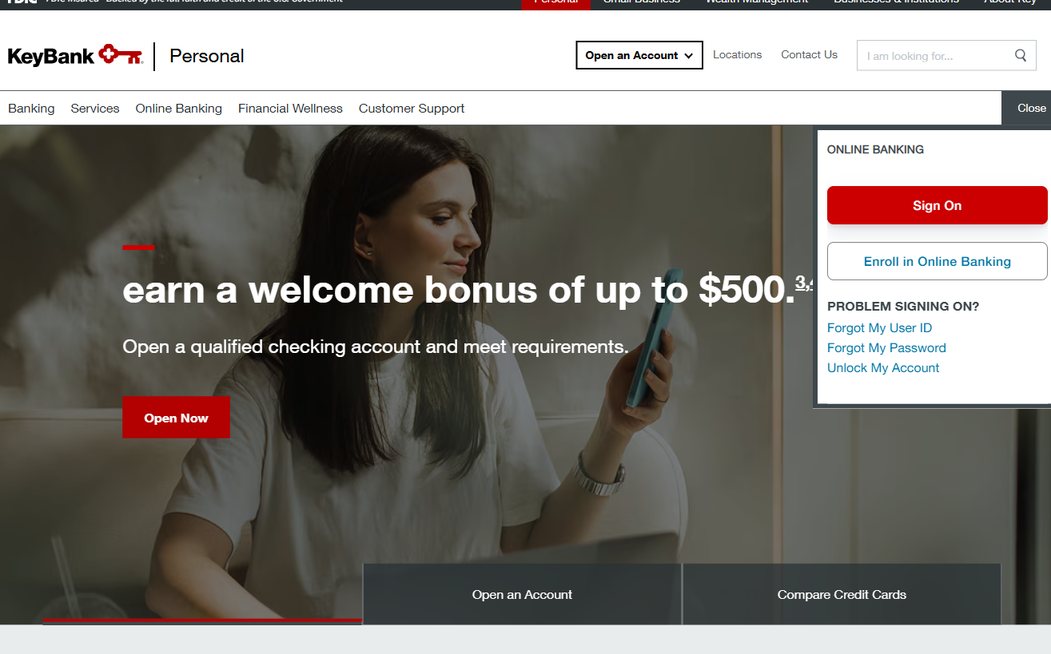
Key Bank represents the traditional powerhouse in this list. As an FDIC-insured institution, it offers a level of security and stability that matters for major financial milestones. It is a place for people looking to build a comprehensive banking relationship, starting from their first checking account and moving toward their first home.
They may have stricter requirements than a payday lender, such as requiring a more established income history or a minimum credit score. However, they offer a path toward significant life goals. From checking accounts to mortgages, they are designed for the consumer ready to move from surviving to thriving. This bank is a destination for when you have moved past “emergency” borrowing and into “growth” borrowing.
Pros:
- FDIC-insured, providing significant consumer protection.
- Comprehensive range of services from checking to wealth management.
- Strong reputation for stability and reliability.
Cons:
- Likely has stricter requirements for first-time borrowers.
The Mechanics of a Successful Application
For those without credit, an application is less about “what you owe” and more about “what you earn.” To maximize your chances, you must show up prepared. Lenders want to see that you have the capacity to repay the debt without struggling to pay for your basic living expenses.
Follow these steps to strengthen your profile before you hit “apply”:
- Verify Income Consistency: Keep your last three months of pay stubs, W-2s, or 1099 forms ready. If you are self-employed, have your most recent tax returns available to prove your average monthly revenue.
- Audit Your Bank Statements: Many modern lenders use “cash-flow underwriting.” They will look at your digital statements. Ensure there are no excessive “non-sufficient funds” (NSF) fees or overdrafts in the last 90 days, as these are major red flags.
- Prepare Identity Verification: Have a clear, high-resolution photo of your driver’s license or passport and a recent utility bill. In the digital lending age, delays often happen because of blurry photos or mismatched addresses.
- Review Your Debt-to-Income (DTI) Ratio: Even without a credit score, you have a DTI. Calculate your monthly debt obligations (rent, car payments, phone bills) against your monthly gross income. A lower DTI makes you a much more attractive candidate.
Navigating the Borrowing Landscape Safely
The biggest mistake first-time borrowers make is rushing into a high-interest agreement without reading the fine print. It is easy to get blinded by the “instant approval” button, but that speed often comes with higher interest rates. Always calculate the total cost of the loan before signing. Look at the APR (Annual Percentage Rate), not just the monthly payment. A $100 monthly payment might seem fine, but if it lasts for 24 months on a $500 loan, you are paying back double what you borrowed.
Avoid the trap of “borrowing from Peter to pay Paul.” Taking out a new loan to pay off an old one is a spiral that is hard to escape. This cycle, often called “loan stacking,” can rapidly damage your financial health. Instead, use these tools for productive expenses—like a car repair that keeps you working or a medical bill that prevents collections—rather than using debt to fund lifestyle inflation or recurring monthly deficits.
Keep your documentation organized. Whether it is proof of income or identity verification, having your paperwork ready prevents delays. Even without a credit history, showing a consistent stream of income is your strongest weapon. As you master the art of small, responsible loans, the “thick fog” of the credit world will begin to clear, revealing much more favorable and traditional lending opportunities.
