

The 6 Best Lenders for HVAC AC Financing in 2026
Last updated: 2026-11-10
When a furnace dies during a blizzard or an AC unit quits in a July heatwave, the sudden bill feels like a punch to the gut. Homeowners often find themselves staring at a massive repair quote that threatens the monthly budget. Spreading those costs out is often the only way to keep the house comfortable without draining a savings account.
An unexpected HVAC failure is rarely a planned expense. It is a reactive necessity that arrives at the worst possible times, like a holiday weekend or during peak seasonal demand when labor rates spike. These emergencies demand quick thinking and even quicker financial solutions to keep the temperature steady.
Choosing a financing method depends on your credit standing and how fast you need air moving through the vents. Some options favor those with impeccable credit by offering low rates. Others are built specifically for people who have been denied elsewhere. It is a wide spectrum of choices, from traditional bank loans to flexible lease-to-own agreements.
Understanding the difference between a personal loan and manufacturer financing is your first step toward a smart decision. With a personal loan, you control the cash and can spend it anywhere. With manufacturer financing, the loan is tied to a specific unit. Knowing this distinction prevents a lot of headaches later on.
- HVAC Direct
- JetzLoan
- American Standard
- Wells Fargo
- LightStream
- Breeze Lease Purchase
Evaluation Criteria for Home Comfort Loans
Comparing these lenders comes down to accessibility and speed. In the HVAC world, time is everything. A broken system affects your quality of life immediately, so a lender that takes weeks to process an application isn’t much help if your house is currently eighty-five degrees inside. The urgency of your situation dictates which door you knock on first.
A total system failure in mid-winter might require an immediate emergency financing solution. In contrast, a planned upgrade to a high-efficiency heat pump might allow you to wait several weeks to secure a much lower interest rate. You have to decide if you are fighting a fire or performing a scheduled renovation.
Speed, credit flexibility, and brand availability were the metrics used for this list. Some lenders are tied directly to equipment manufacturers, while others are general personal loan providers. This distinction determines whether you are financing a specific unit or simply getting cash to pay any contractor you choose.
If you choose a general personal loan, you have the freedom to shop for the best installation price across multiple companies. If you choose manufacturer financing, you are often locked into the specific dealer that provided the quote. However, you might benefit from specialized promotional rates, like 0% APR for an extended period.
| Lender Name | Max Loan Amount | Funding Speed | Credit Requirement |
|---|---|---|---|
| HVAC Direct | see site | Minutes | see site |
| JetzLoan | $35,000 | 24 hours | No hard pull |
| American Standard | see site | see site | |
| Wells Fargo | see site | see site | |
| LightStream | see site | see site | |
| Breeze Lease Purchase | see site | Fast | Low/No credit required |
1. HVAC Direct
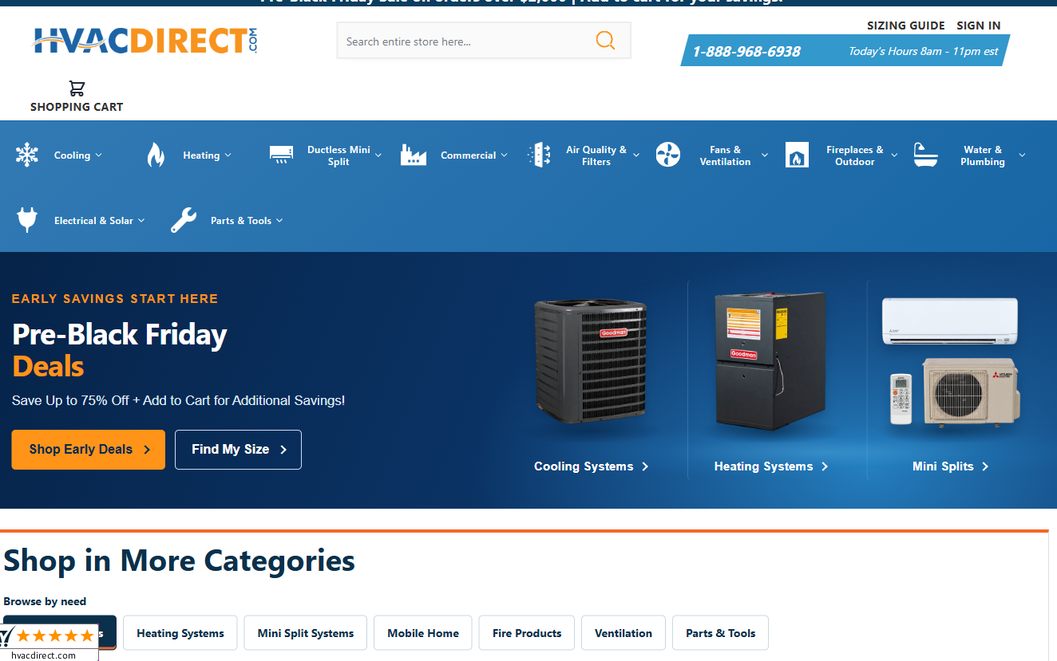
This option works well for the DIY enthusiast or the homeowner who wants to shop around for specific brands like Mitsubishi, Trane, or Goodman. Instead of waiting for a contractor to provide a quote, you can select your own equipment directly from the source. It cuts out the middleman in the shopping process.
This is particularly useful for homeowners who are savvy about technical specifications. If you want a specific SEER2 rating or a certain type of variable-speed compressor, you can get it. You can avoid being upsold on unnecessary add-ons by a local contractor who might not have your best interests at heart.
The process is built for speed, allowing you to select a system and apply for financing right on the website. You often know if you are approved within a very short window. It is a streamlined approach for those who know exactly what hardware they want to install in their home.
Because you are buying the unit directly, you avoid the markup that some installation companies add to the hardware. However, you must account for the cost of hiring a licensed technician to perform the actual labor. You’ll also need to ensure that your chosen technician can keep your warranty valid.
Pros:- Direct access to major brands like Mitsubishi and Goodman
- Quick application process
- Potential for significant savings through seasonal sales
- Requires the user to manage their own installation
- Limited to the brands carried in their inventory
2. JetzLoan
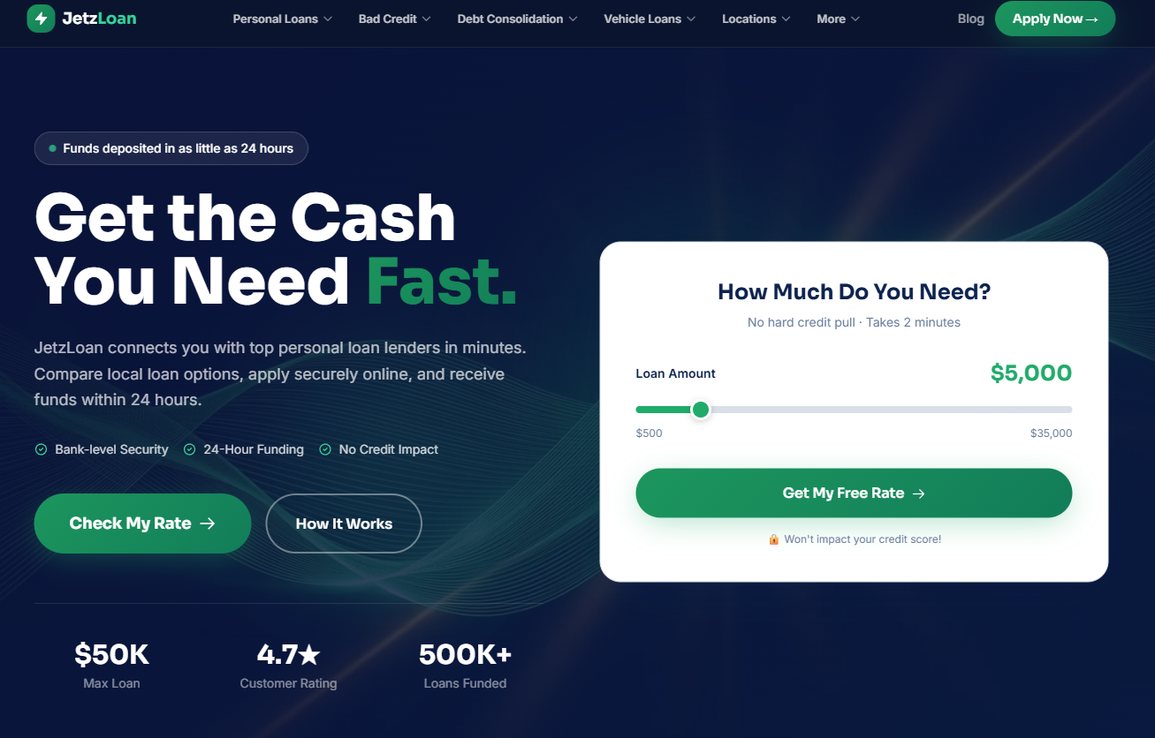
JetzLoan acts as a link between the consumer and various personal loan lenders. It is a high-speed option for those who need cash quickly to handle an emergency. If your system fails on a Friday night, you need a solution that doesn’t require a mountain of paperwork.
Unlike a mortgage-based home equity loan, which can take weeks to close and involves appraisals, this type of personal financing is built for rapid deployment. (jetzloan.com). It is designed to get you back to comfort without the long waiting periods.
The standout feature here is the ability to check rates without a hard credit pull. This means you can see what you might qualify for without taking a hit to your score. It is a great safety net for those who are still testing the waters of their borrowing capacity.
Once approved, the funds are typically sent directly to your bank account. This gives you the liquid capital needed to pay an emergency technician on the spot. This is a lifesaver if that technician doesn’t offer their own internal financing or if you want to pay them immediately.
Pros:- No hard credit pull to check rates
- Funds can be deposited in as little as 24 hours
- High maximum loan amount of $35,000
- Connects you to other lenders rather than being the sole lender
- Requires a multi-step process to find the right match
3. American Standard
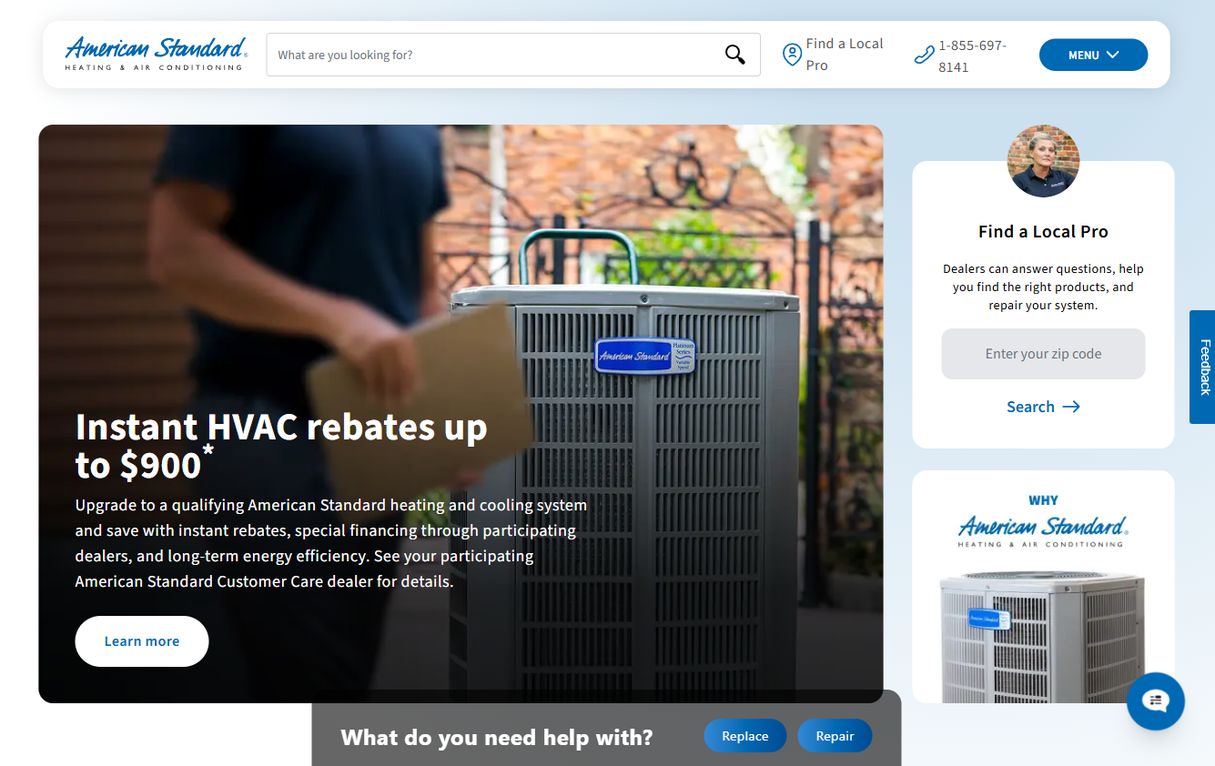
For homeowners who want a hands-off experience, working directly with a manufacturer-affiliated dealer is often the smoothest path. American Standard offers an integrated approach where the financing is often tied to the specific equipment being installed. This makes the transition from quote to installation very simple.
When the dealer provides the quote, they are also providing the financing. This means you only have to deal with one entity for both the hardware and the payment plan. It removes the need to coordinate between a technician and a bank, which can be a headache during a crisis.
They provide access to local professionals who can guide you through the technical details. This is particularly helpful if you are unsure whether you need a heat pump or a traditional furnace. You get the benefit of expert advice paired with specialized financing options.
For instance, many of these dealers offer “no payments for six months” promotions. This can be a lifesaver if you are trying to manage cash flow during a difficult season. It gives you a little breathing room while your new system settles into its role in your home.
Pros:- Access to instant HVAC rebates up to $900
- Support from local professional dealers
- Specialized financing through participating dealers
- Financing terms depend on specific dealer availability
- Rebate eligibility can be complex and vary by location
4. Wells Fargo
When you have a strong credit history, a major traditional bank like Wells Fargo can be a powerhouse. They offer a more conventional banking experience, which often includes competitive interest rates. This is a standard choice for those who prefer working with established financial institutions.
Because these are often unsecured personal loans, you are not putting your home at risk. That is a significant psychological advantage for many homeowners. You can get the work done without the fear that a missed payment could lead to a lien on your property.
They offer a variety of products, but for HVAC, their personal loan options are the main draw. It is a solid choice if you want to bundle your home comfort upgrades with other financial goals, such as a kitchen remodel or a new roof.
However, you must have the credit profile to back up the application. If your score is below 680, you may find that the approval process becomes much more difficult. You might also find that the interest rates offered are not significantly better than the fintech alternatives.
Pros:- Established, reputable national banking institution
- Potential for 0% APR options for qualifying customers
- Wide range of other financial services available
- Strict credit requirements for the best rates
- Approval processes can be more formal than fintech options
5. LightStream
LightStream is a specialized division of Truist Bank that caters to borrowers with high credit scores looking for low-interest loans. If you are looking to upgrade your entire home system to a high-efficiency model, this is a premium option. It is built for significant investments.
It is designed for people who view an HVAC system as a long-term home investment rather than a temporary fix. When you are installing a high-end multi-zone ductless system or a full geothermal setup, the upfront costs can be massive. LightStream provides the capital to do it right the first time.
They are known for their ability to fund loans for practically anything, meaning you aren’t restricted to a specific brand or contractor. This flexibility allows you to shop around for the best installation price while using a low-interest loan to pay for it.
Because they are a major bank, their underwriting processes are sophisticated. They often provide a very high degree of transparency regarding the total cost of the loan up front. You won’t have to hunt for hidden fees in the fine print of a complex contract.
Pros:- Low-interest rates for those with strong credit
- Extreme flexibility in how you use the funds
- Backed by the stability of Truist Bank
- Not a suitable option for those with less-than-perfect credit
- Application processing is limited to specific business hours
6. Breeze Lease Purchase
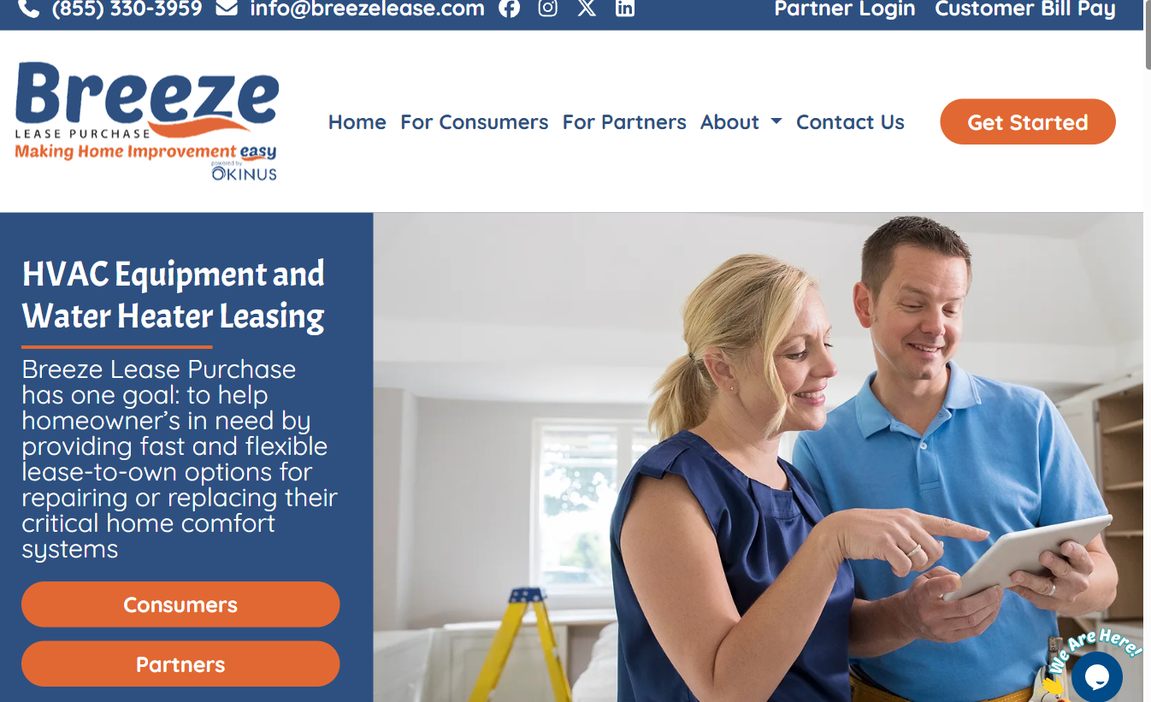
Breeze Lease Purchase exists to serve the significant portion of Americans who fall into the “less-than-perfect credit” category. Traditional banks often turn these people away, leaving them in the cold when their heater stops working. This lender steps in to bridge that gap through a lease-to-own model.
This is not a traditional loan, but a way to rent the equipment with the goal of owning it later. It is a vital lifeline for homeowners who need immediate comfort but cannot qualify for standard financing. It covers everything from full systems to individual parts.
This can be particularly helpful for renters who are moving into homeownership or for individuals who have had a recent dip in their credit score. Life happens, and sometimes medical bills or other unexpected events can temporarily dent your rating.
This option prioritizes the immediate need for climate control over the traditional requirement for a high credit score. It is about getting your home back to a livable temperature without waiting for a bank to approve a massive loan.
Pros:- Designed for people with imperfect credit
- Flexible lease-to-own options
- Covers both full systems and replacement parts
- Lease-to-own models can be more expensive over time
- Not a traditional ownership model from day one
Understanding the Total Cost of Ownership
When evaluating an HVAC financing offer, many homeowners fall into the trap of “payment myopia.” This is when you focus solely on the monthly amount. To make an informed decision, you must calculate the Total Cost of Ownership (TCO). This is the real number that matters.
This includes the principal loan amount plus all interest paid over the life of the loan, plus any administrative fees or origination fees charged by the lender. A $200 monthly payment might seem manageable, but if that is spread over 72 months at a high interest rate, the math changes quickly.
You could end up paying nearly double the actual cost of the unit. Compare these two scenarios to see the difference in real dollars:
- Scenario A: A $5,000 repair with a 12-month loan at 8% APR. Total repayment: ~$5,210.
- Scenario B: The same $5,000 repair with a 60-month “flexible” lease-to-own plan where the total cost equals $8,500.
In Scenario B, you gain short-term breathing room, but you pay $3,300 more for the same piece of equipment. It is a steep price for convenience. Always ask for a “total repayment schedule” before signing any contract.
How to Maximize Savings with Financing
Financing doesn’t have to be a burden if you strategically use the available incentives. To get the most value, follow these three steps:
- Audit Your Tax Credits: Under recent legislation like the Inflation Reduction Act, many high-efficiency heat pumps and water heaters are eligible for significant federal tax credits. These credits can often offset a large portion of the installation cost, which you can then pay off using your financing.
- Check for Local Utility Rebates: Many local electric or gas companies offer “instant rebates” if you switch from an old, inefficient furnace to a modern high-efficiency model. These rebates are often applied at the point of sale, reducing the amount you need to borrow.
- Time Your Replacement: HVAC contractors often run “shoulder season” sales in the spring and fall when demand is low. If your unit is failing but still running, waiting two months to install a new system can sometimes save you 10-15% on the hardware cost.
Avoiding Common Financing Pitfalls
The most common mistake is rushing into a high-interest agreement just because a contractor is standing in your living room with a clipboard. It is easy to feel pressured when your house is uncomfortable, but a quick check of your options can save you thousands in interest. Don’t let the discomfort drive a bad financial decision.
Always demand a written estimate before discussing financing. Many contractors will try to push a specific financing partner because they receive a commission on the loan origination. You should be the one in control of which lender you use.
Always compare the total cost of ownership, not just the monthly payment. A low monthly payment might look attractive, but if it requires a ten-year term, you will end up paying a fortune. Look at the total amount repaid by the end of the term to see the true price of your comfort.
If you are offered a “0% interest for 12 months” deal, be aware of the fine print. If you fail to pay the balance in full by month 13, some lenders will back-charge you interest from the original purchase date. It is a trap that can turn a great deal into a nightmare.
Another trap is failing to check if your equipment is eligible for specific rebates or tax credits. Some lenders or manufacturers offer incentives that can significantly lower your out-of-pocket costs. Always ask your installer, “Will this specific model qualify for a rebate?” before you sign anything. A unit that is $500 more expensive upfront but qualifies for a $1,000 tax credit is actually the cheaper option in the long run.
