

Top 5 Lenders for a Personal Loan With Co-Signer in 2026
Last updated: 2026-11-10
Finding a lender willing to accept a co-signer often feels like searching for a needle in a haystack, particularly if your credit score isn’t exactly sparkling. You are likely trying to bridge the gap between your current financial standing and the strict requirements of a traditional bank. Having a partner with a stronger profile can open doors that otherwise remain firmly shut.
This arrangement might secure you a lower interest rate, a higher loan amount, or simply an approval when a solo application would have been flatly rejected. When you start looking at lenders, the real priority is finding a balance between accessibility and cost. It is not just about getting the cash in hand; it is about the terms attached to that debt.
You need to weigh the speed of funding against the long-term impact on both your credit and your co-signer’s financial health. A loan that solves a $2,000 emergency today could become a $4,000 liability over the life of the loan if the interest rates are poorly structured. Understanding the mathematical reality of your repayment schedule is just as important as finding someone to sign the paperwork.
- FastLendGo
- Experian
- Cash Store
- Sunward
- Hearth
How These Lending Options Were Evaluated
To create this list, we focused on the availability of specialized products for diverse credit profiles. We looked at how easily different institutions handle various credit tiers, from those with stellar histories to those struggling with recent setbacks. The ability to complete the application process without unnecessary friction was a significant factor in this selection.
We specifically sought out lenders that offer clear pathways for co-signers. Many traditional big-box banks use rigid automated systems that struggle to process manual co-signer verification efficiently. Accessibility across different states was also a key metric. Since lending laws vary wildly from one coast to the other, it was vital to identify which providers offer a wide geographic footprint.
State laws affect everything from maximum allowable interest rates to the types of installment loans available. We also considered the variety of loan purposes, such as emergency repairs, motorcycle financing, or debt consolidation. A lender that is excellent for a personal loan might be useless if you specifically need a secured auto loan for a used vehicle.
| Lender Name | Loan Amounts | Credit Requirements | Funding Speed | Primary Focus |
|---|---|---|---|---|
| FastLendGo | $500 – $5,000+ | Bad, Fair, Good, Great | See site | Various specialized loans |
| Experian | See site | Prequalify available | See site | Credit tools & loans |
| Cash Store | See site | Installment options | See site | Payday alternatives |
| Sunward | See site | Member-friendly rates | See site | Credit Union services |
| Hearth | See site | See site | See site | See site |
Top-Rated Lenders for Co-Signed Borrowing
1. FastLendGo
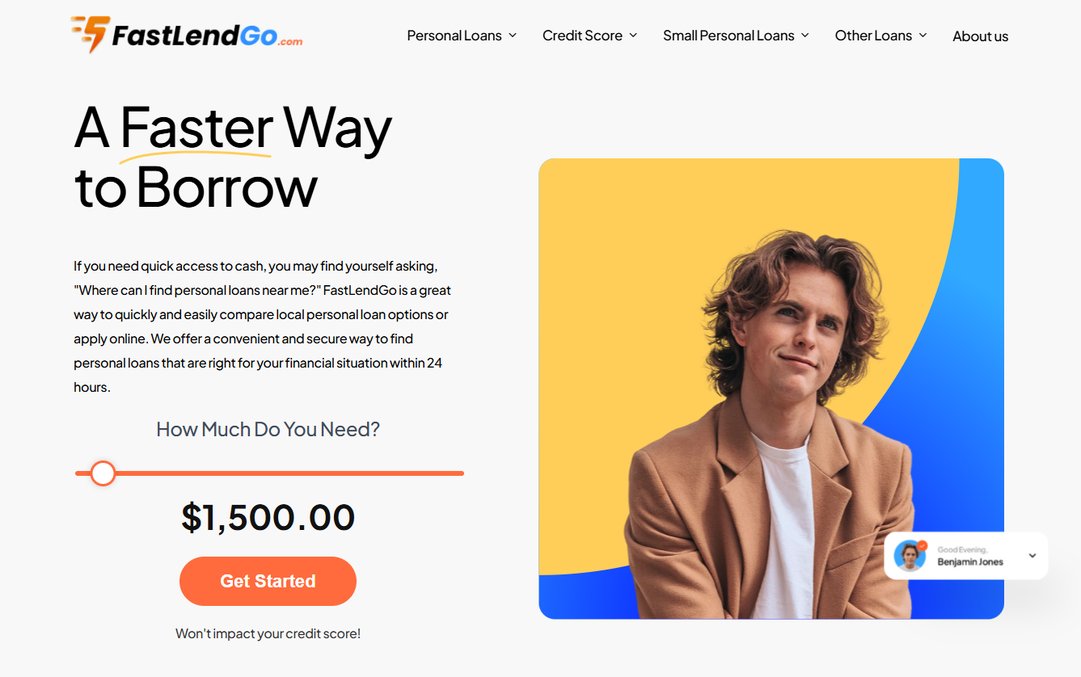
FastLendGo works well for those who might find traditional banking a bit too stiff. They offer a wide array of specialized products, including financing for auto repairs, motorcycles, or even dental and roofing needs. This makes them a go-to for specific, urgent life events that require immediate liquidity. For example, if your primary vehicle breaks down and you need a $1,200 repair to get to work, a specialized loan like this is often faster than waiting for a general personal loan approval. (fastlendgo.com)
The platform is designed for those who need to move quickly. Whether you are dealing with a $500 emergency or a larger $5,000 request, the system helps you compare local options. It is a practical choice for individuals who need to navigate around a less-than-perfect credit history. Because they cater to specific niches, they often have more flexibility in their underwriting criteria than a national conglomerate.
Pros:
- Covers a vast range of specific loan purposes like dental or auto.
- Addresses various credit tiers including bad credit and high-income options.
- Offers small-dollar options starting at $500.
Cons:
- Specific interest rates and terms are not listed upfront.
2. Experian
Experian is a household name for a reason, acting as a massive hub for credit health. While many know them for monitoring, they provide pathways to access cash when it is needed most. They focus heavily on the relationship between credit scores and financial tools. Using Experian is often a step toward long-term financial stability rather than a temporary fix for a debt problem.
This is a strong choice for someone who wants to understand the “why” behind their loan eligibility. By using their tools, you can see how different financial moves might impact your ability to secure a loan. For instance, you can simulate how a new inquiry or a change in your debt-to-income ratio might affect your score before you actually apply. It is less about a quick cash grab and more about a strategic financial approach that prioritizes your future borrowing power.
Pros:
- Provides deep insights into FICO® Scores.
- Offers tools to help raise credit scores via bill payments.
- Allows for prequalification to check eligibility.
Cons:
- Focus is primarily on credit management rather than just lending.
3. Cash Store
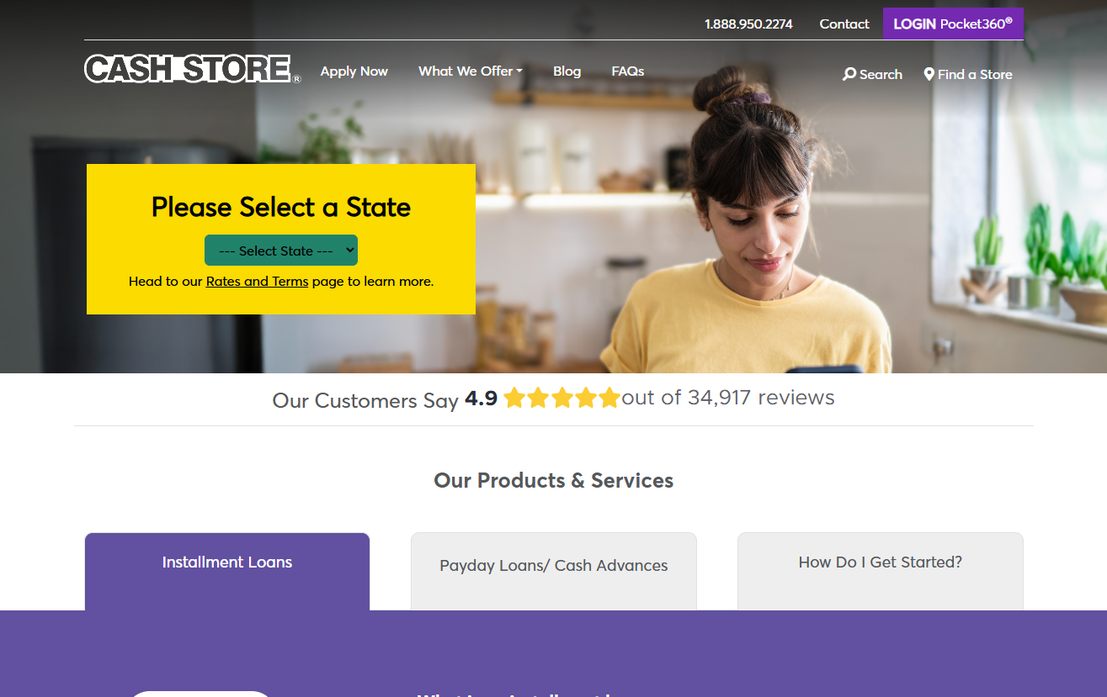
Cash Store positions itself as a direct alternative to the often predatory payday loan market. By offering installment loans, they provide a structured way to borrow money without the immediate, crushing cycle of payday lending. In many payday loan scenarios, you are required to pay back the entire principal plus massive fees in a single two-week window. This often forces borrowers to take out a second loan to cover the first.
Cash Store’s installment model allows you to spread that cost over several months. The company has built a significant reputation through its installment products. If you need a way to manage expenses through structured payments rather than a single lump sum, this is a common route for many. They maintain a heavy presence across several different states, providing a more stable option for those who might otherwise be pushed toward high-interest, short-term lenders.
Pros:
- Provides a structured installment loan alternative to payday loans.
- High customer review volume suggests a large user base.
- Available in a wide variety of states.
Cons:
- Terms and rates are subject to specific state regulations.
4. Sunward
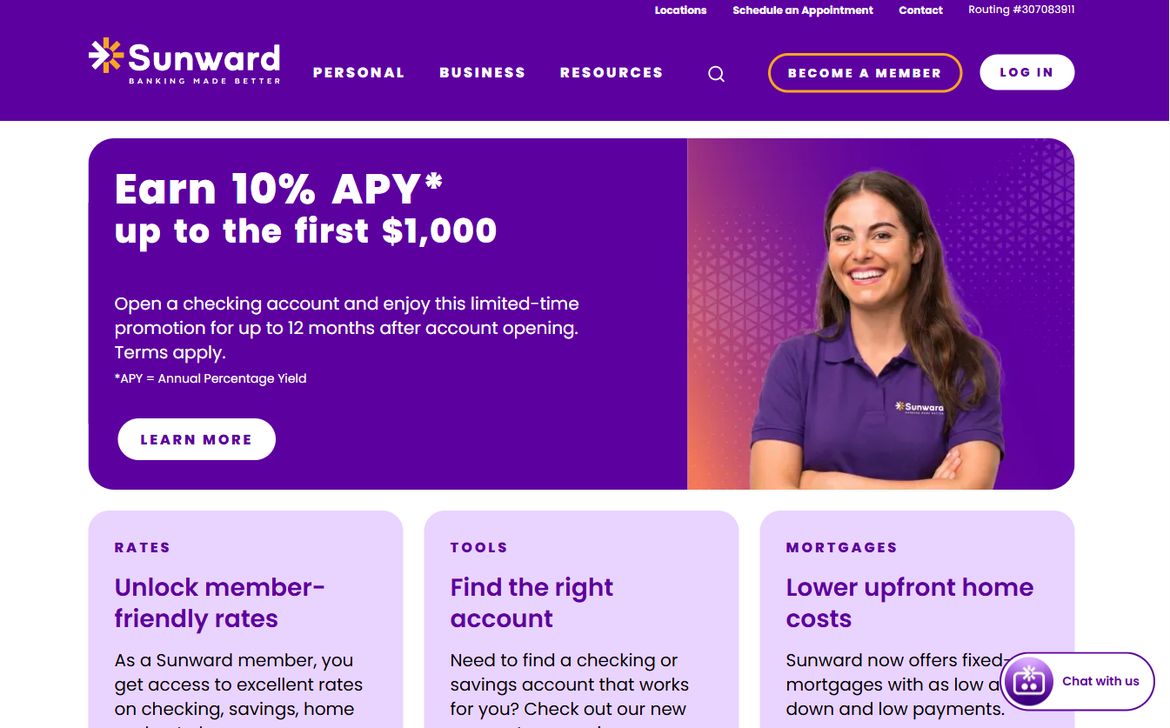
Sunward operates as a credit union, which typically means a more community-focused approach to lending. For members, the benefits can be quite significant, such as competitive rates on checking, savings, and even mortgages. Unlike traditional banks that answer to shareholders, credit unions are member-owned. Their primary goal is often to serve the financial well-being of their community rather than maximizing profit margins for external investors.
If you are looking for a long-term financial partner rather than a one-off transaction, a credit union like Sunward is a formidable contender. They offer specialized products like fixed-rate mortgages and high-yield savings accounts that can help build a foundation for the future. If you have a co-signer who is already a member, the process of tying your credit to theirs can often be much smoother and more transparent through a local institution.
Pros:
- Member-friendly rates on various loan types.
- Offers high-yield savings options for members.
- Provides a wide range of banking services from mortgages to checking.
Cons:
- Requires membership which may involve specific eligibility criteria.
5. Hearth
Hearth functions as a platform that connects borrowers with various lending opportunities. It is designed to streamline the process of finding the right fit, making it a useful tool for those who want to see what is out there without visiting a dozen different websites. Rather than being a single bank, it acts as a marketplace, which can be highly beneficial when you are looking for a specific niche, such as a home equity loan or a specialized personal loan.
The platform is built for efficiency, aiming to simplify the connection between people needing funds and the institutions that provide them. It is a modern solution for a digital age where time is often the most valuable currency. For a co-signer, this can be an advantage because the streamlined digital nature of the application means they spend less time filling out redundant paperwork for multiple different lenders.
Pros:
- Streamlined digital application process.
- Connects users to multiple lending possibilities.
- User-friendly interface for managing applications.
Cons:
- The platform acts as a middleman rather than a direct lender.
How to Prepare for a Co-Signed Loan Application
Securing a co-signer is only half the battle; the other half is ensuring the application process goes smoothly. Many applications are delayed or rejected because the borrower and the co-signer are not prepared with the same level of documentation. To prevent this, both parties should gather their financial “proof of life” before even hitting the “apply” button.
First, ensure both parties have a clear, updated view of their credit reports. If your co-signer has a sudden drop in their score due to a recent large purchase, it could derail your application. Second, prepare a “financial dossier” that includes:
- Recent pay stubs (usually the last two to three months).
- W-2 forms or tax returns from the previous year.
- Current utility bills (to verify residency).
- A clear list of existing monthly debts (car loans, student loans, credit card minimums).
Understanding the Risks to Your Co-Signer
It is vital to realize that a co-signer is not just an “endorsement”; they are a legal guarantor. If you default on the loan, the lender will not simply stop asking you for money. They will pursue the co-signer for the full amount, including any late fees or legal costs incurred during the collection process. This can lead to several cascading financial issues for your partner.
For example, if a co-signer is using a significant portion of their income to help cover your missed payments, they may struggle to qualify for their own loans, such as a car loan or a mortgage. Their debt-to-income ratio will increase, even if they aren’t the ones spending the money. Furthermore, if you are late on a single payment, it can trigger a “delinquency” mark on their credit report. This can lower their score by dozens of points in a single month, potentially impacting their ability to rent an apartment or even secure certain types of employment that require credit checks.
The best way to mitigate this risk is to treat the co-signed loan as if it were your own sole responsibility, but with a built-in safety net. Set up automatic payments and aim to pay the loan off faster than the required schedule. This reduces the total interest paid and ensures that the co-signer’s credit remains untouched by the stress of late payments.
Avoiding Common Pitfalls in the Borrowing Process
The first mistake many people make is picking a co-signer without having a serious conversation about the consequences. A co-signer isn’t just a “helper”; they are legally responsible for the debt. If you miss a payment, their credit score takes a hit just as much as yours. It is a heavy burden to place on a friend or family member. You should explicitly discuss a “what if” plan: What happens if you lose your job? What happens if you have a medical emergency? Having a contingency plan can prevent a financial crisis from turning into a personal one.
Another trap is rushing into the first offer that comes your way. Just because a lender says “yes” doesn’t mean they are giving you a fair deal. Always look at the total cost of the loan, including any hidden fees or high interest rates that might make the debt much larger than it looks on paper. For instance, an APR of 15% sounds manageable, but if there is a massive “origination fee” taken out of the loan at the start, your effective interest rate is actually much higher. Compare at least two or three options before signing anything.
Finally, be wary of the “quick fix” mentality. While emergency loans are lifesavers in a crisis, they are not a long-term strategy for managing debt. Use a co-signer to get a better rate on a loan that you actually have a plan to pay back. If you don’t have a budget in place, the loan will only lead to more stress down the road. A co-signer is a tool for leveraging better terms, not a tool for subsidizing a lifestyle that is currently out of reach.
