

Best Lenders for No Credit Check Home Improvement Loans in 2026
Last updated: 2026-11-10
Walking into a hardware store with a massive renovation vision and a bruised credit score can feel like trying to run a marathon in quicksand. Many homeowners assume a dip in their rating means their dream kitchen or new deck is permanently out of reach. However, the financial landscape in 2026 has shifted significantly.
The rise of fintech and specialized lending marketplaces means that “no” is no longer the only answer for those with subprime or mid-tier credit. Instead, the challenge has moved from finding *any* money to finding the *right* type of money that won’t cripple your long-term solvency.
Choosing a lender is about more than just finding the lowest interest rate on a piece of paper. It requires balancing speed, transparency, and the ability to secure funds without a hard credit inquiry. A hard inquiry—the type that happens when a lender pulls your full credit report to finalize an application—can shave points off your score, potentially disqualifying you from better rates later.
In an era of volatile interest rates, being able to “window shop” via soft pulls is a massive advantage for the savvy homeowner. This guide cuts through the marketing noise to help you find a realistic path forward for your home projects.
- JetzLoan
- Trident Home Loans
- Acorn Finance
- Splash Financial
How These Home Improvement Lenders Were Evaluated
To determine which lenders actually deliver on their promises, several key performance indicators were analyzed. We prioritized the ability to check rates without impacting a credit score, which is vital for those exploring options. Speed of funding also played a massive role, especially for urgent repairs like a leaking roof or a broken furnace.
In these scenarios, waiting two weeks for a bank’s manual review process could result in secondary water damage that inflates the repair cost by thousands of dollars. We looked closely at the maximum loan amounts available to ensure they could cover significant remodeling costs. For a simple bathroom vanity replacement, a small personal loan suffices.
However, for a complete basement conversion or a structural deck replacement, the limits need to be significantly higher. Furthermore, the ease of the application process was weighed heavily. A complicated, multi-day paperwork trail—requiring physical signatures, notarized documents, or the mailing of pay stubs—is the last thing a homeowner needs when they are staring at an outdated bathroom or a crumbling deck.
We focused on lenders that offer digital uploads and streamlined verification to ensure the friction between “idea” and “execution” is minimized. The following table provides a quick snapshot of the top contenders.
| Lender Name | Max Loan Amount | Funding Speed | Credit Impact for Quotes |
|---|---|---|---|
| JetzLoan | $50,000 | As little as 24 hours | No impact |
| Trident Home Loans | see site | see site | see site |
| Acorn Finance | see site | see site | No impact |
| Splash Financial | see site | see site | No impact |
Top Rated Lenders for Your Home Remodel
1. JetzLoan

When time is of the essence, JetzLoan steps up to the plate with impressive velocity. They focus on connecting borrowers with top personal loan lenders in just a few minutes. It is a streamlined approach designed for those who need cash quickly to keep a contractor on schedule or fix an emergency.
If you have a contractor who requires a 50% deposit upfront to secure a specific window of labor, JetzLoan’s rapid turnaround can be the difference between a finished project and a month-long delay. The platform is built for speed, allowing users to receive funds in as little as 24 hours.
This makes it a top contender for quick debt consolidation or smaller vehicle and home-related needs. It is a digital-first experience that avoids the old-fashioned, slow-moving bank bureaucracy. By utilizing modern automated underwriting, they can bypass the weeks of deliberation often found at traditional credit unions.
Pros:
- Rapid 24-hour funding capability.
- No hard credit pull to check rates.
- High customer rating of 4.7 stars.
Cons:
- Maximum loan amount is capped at $50,000.
2. Trident Home Loans
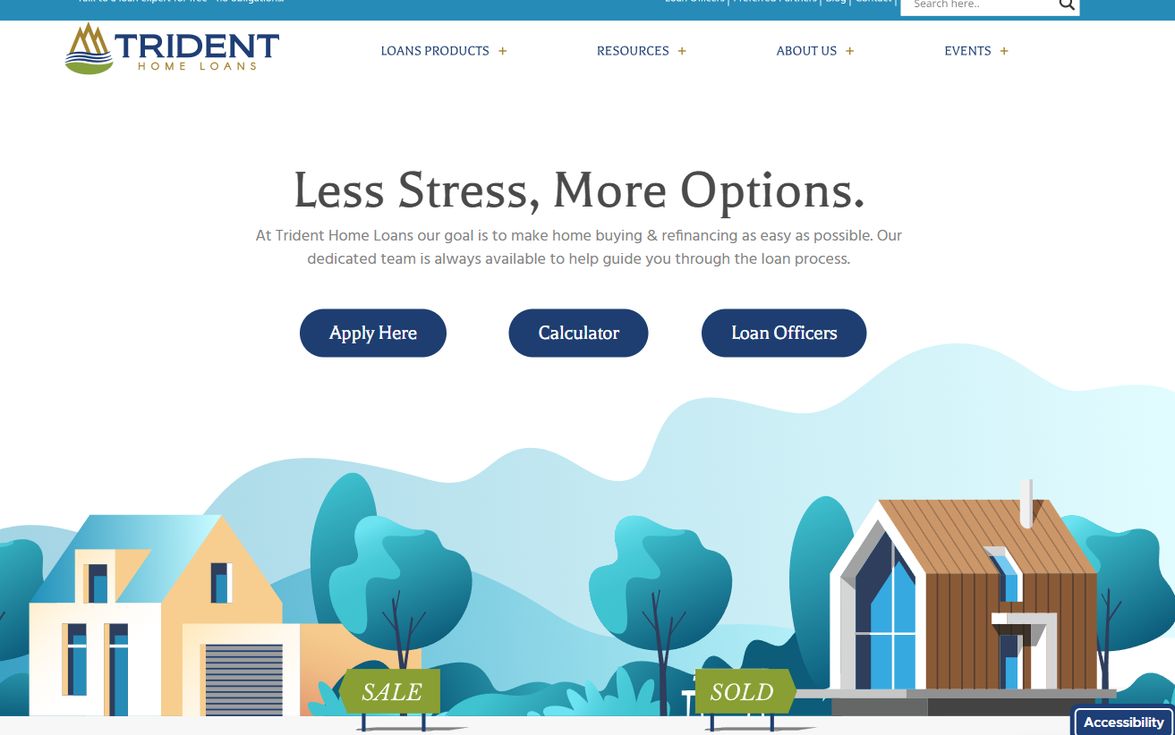
Trident Home Loans operates with a more traditional, consultative mindset. They understand that a mortgage or a major refinance is a heavy lift for any household. Their team offers free, no-obligation guidance to help navigate the complexities of the loan process from start to finish.
This is particularly helpful for homeowners who are looking into Home Equity Loans or other secured products where the property itself serves as collateral. This lender is particularly suited for those who prefer speaking with human experts rather than just clicking through an automated portal.
If you find the world of interest rates, debt-to-income ratios, and equity percentages confusing, having a dedicated loan officer can provide much-needed peace of mind. They act as a navigator through the dense forest of financial jargon, ensuring you understand exactly what you are committing to before you sign.
Pros:
- Access to dedicated loan officers for guidance.
- Focus on transparency and clear information.
- Specialized in home buying and refinancing.
Cons:
- Process may be slower than instant-approval digital lenders.
3. Acorn Finance
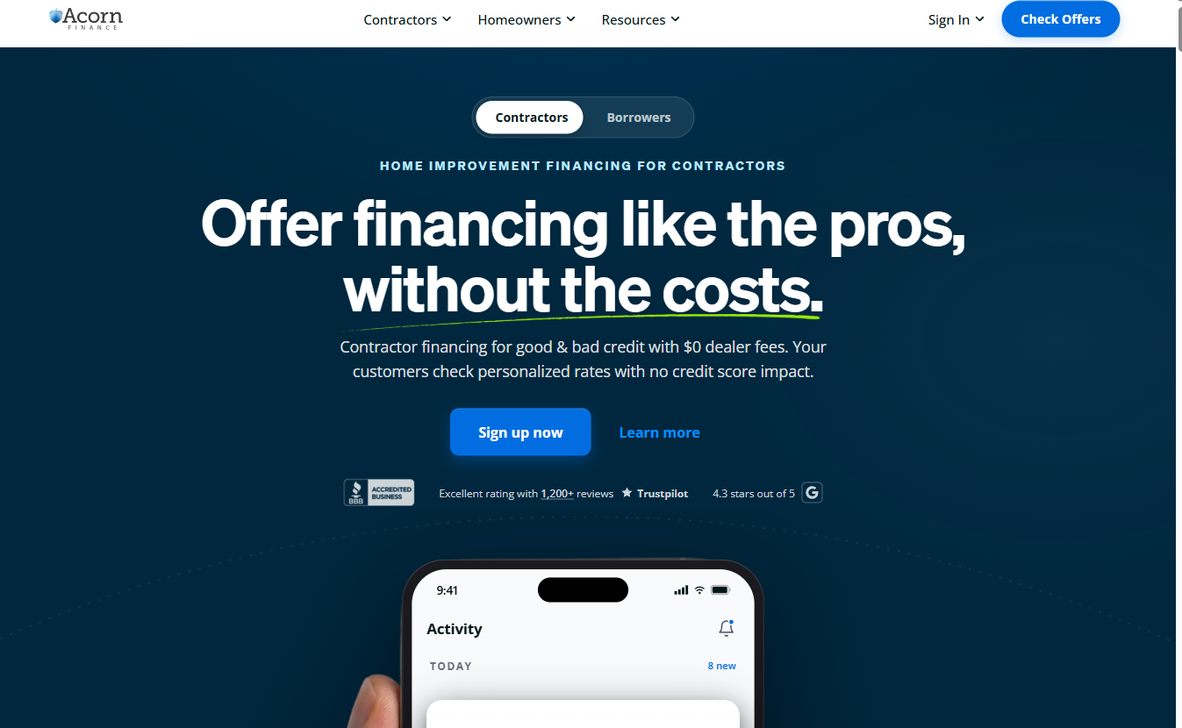
Acorn Finance acts as a powerful bridge between homeowners and contractors. They offer specialized financing that is 100% free for contractors, which helps keep project costs from ballooning. It is a clever ecosystem that serves both the person paying for the work and the professional doing it.
Because the contractor doesn’t pay a fee to offer your financing, they are often more willing to stick to their original quote rather than adding a “financing surcharge” to the total bill. This is an excellent choice for those with less-than-perfect credit.
They offer personalized rates without impacting your credit score, allowing you to shop around for the best deal. Their high volume of recent activity shows they are a go-to for everything from HVAC replacements to pool installations. They specialize in “project-based” lending, which aligns the financing directly with the specific renovation task at hand.
Pros:
- Excellent 4.3-star rating on Trustpilot.
- Zero dealer fees for contractors.
- Highly specialized for home improvement projects.
Cons:
- Rates are subject to individual credit profiles.
4. Splash Financial

Splash Financial offers a wide variety of products, ranging from personal loans to Home Equity Lines of Credit (HELOCs). This versatility makes them a strong contender for homeowners who might need a different type of credit as their project evolves. For example, if you start with a small personal loan for a kitchen update but realize you also need to replace the flooring and lighting, the ability to access a HELOC later provides a strategic financial roadmap.
They take privacy seriously, promising not to sell your sensitive data. This is a breath of fresh air in an era where data harvesting is the norm. If you want to see what you qualify for in as little as three minutes, Splash is a very efficient option.
Their interface is designed to be intuitive, making the comparison of different loan terms feel more like online shopping than a financial ordeal. You can move through the various product offerings without feeling overwhelmed by technical jargon or complex navigation menus.
Pros:
- Diverse product range including HELOCs and student loans.
- Fast rate checking in approximately three minutes.
- Strong commitment to data privacy.
Cons:
- May require more documentation for specific product types.
Understanding Loan Types: Which is Right for You?
Before choosing a lender, you must understand the vehicle you are driving. Not all home improvement money is created equal. Choosing the wrong product can lead to much higher interest costs or unexpected risks to your primary asset.
Personal Loans are typically unsecured, meaning you don’t put your house up as collateral. This makes them easier to obtain if your credit is slightly bruised, and they usually have fixed rates and set repayment terms. However, because they are unsecured, the interest rates are typically higher than equity-based products.
This is ideal for projects under $50,000, such as a bathroom remodel or a new fence. Home Equity Lines of Credit (HELOCs) are secured by your home. This means you can often access much larger sums of money at much lower interest rates. However, the downside is significant: if you fail to make payments, the lender can foreclose on your home.
HELOCs are best for large-scale, multi-phase renovations, such as adding a new bedroom or a full kitchen and living room overhaul. They offer a “revolving” credit feature, meaning as you pay down the balance, the funds become available again, much like a credit card.
Cash-Out Refinancing is another option where you replace your existing mortgage with a new, larger one and take the difference in cash. This is a heavy-duty financial move that can change your entire mortgage term and interest rate, so it should only be used for major capital improvements that significantly increase the home’s appraised value.
How to Maximize Your Borrowing Power
If you are worried about your credit score, there are several proactive steps you can take before you submit a formal application. While “soft pulls” allow you to check rates, a “hard pull” is what ultimately determines your approval and final terms. To present the strongest possible case to a lender, consider these steps:
- Audit Your Debt-to-Income (DTI) Ratio: Lenders look at how much of your monthly income goes toward existing debt. If you have high credit card balances, paying them down even slightly before applying can significantly improve your DTI, making you a much more attractive borrower.
- Gather Documentation Early: The difference between a 24-hour approval and a two-week delay is often the speed at which you can provide proof of income. Have your last two years of W-2s, your most recent pay stubs, and your most recent bank statements ready in a digital folder.
- Get Multiple Quotes via Soft Pulls: Use lenders like JetzLoan or Acorn Finance to compare rates. Do not settle for the first offer. Even a 1% difference in interest rate can save you thousands of dollars over the life of a five-year loan.
- Verify Contractor Estimates: Never borrow more than your written quotes indicate. Always ask contractors for “all-in” pricing that includes labor, materials, disposal fees, and permits. A “low-ball” estimate that ignores permit fees can leave you scrambling for more cash mid-project.
Navigating the Financing Maze
Before signing on the dotted line, it is vital to understand the total cost of your project. A loan might look attractive because of its monthly payment, but the total interest paid over the life of the loan can be a different story entirely. Always ask for the total repayment amount in dollars, not just a percentage.
A 5% interest rate over 10 years is far more expensive than a 7% rate over 3 years. Always calculate the “total cost of credit” before committing. One common mistake is failing to account for the “hidden” costs of home improvement. Taxes, permits, and shipping fees for materials can push a budget past the breaking point.
Ensure your loan amount covers these contingencies so you aren’t left halfway through a kitchen remodel with no way to finish. A 15% contingency buffer is the industry standard for a reason; unexpected plumbing issues or structural surprises are almost guaranteed in older homes.
Additionally, avoid the temptation to take out more money than you absolutely need just because it is available. While a larger cushion feels safe, it increases your debt burden and your monthly obligations. It is often smarter to borrow for the immediate project and seek additional funding later if the need arises.
Keeping your debt-to-income ratio low provides you with more financial flexibility for future needs, such as emergency repairs or even a down payment on a second property.
